Reading Time: 4′
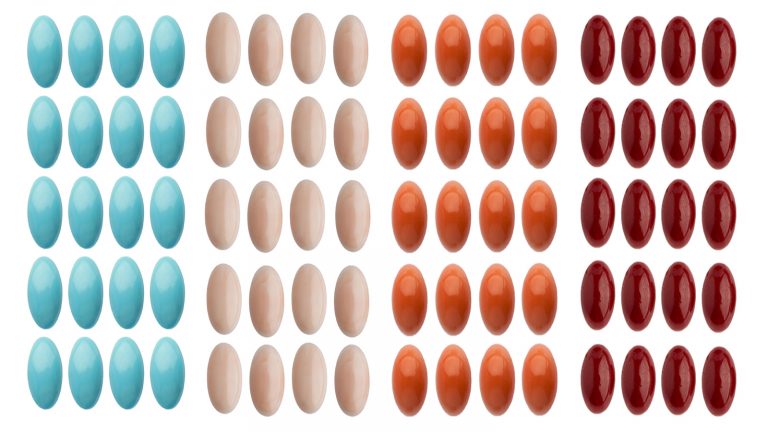
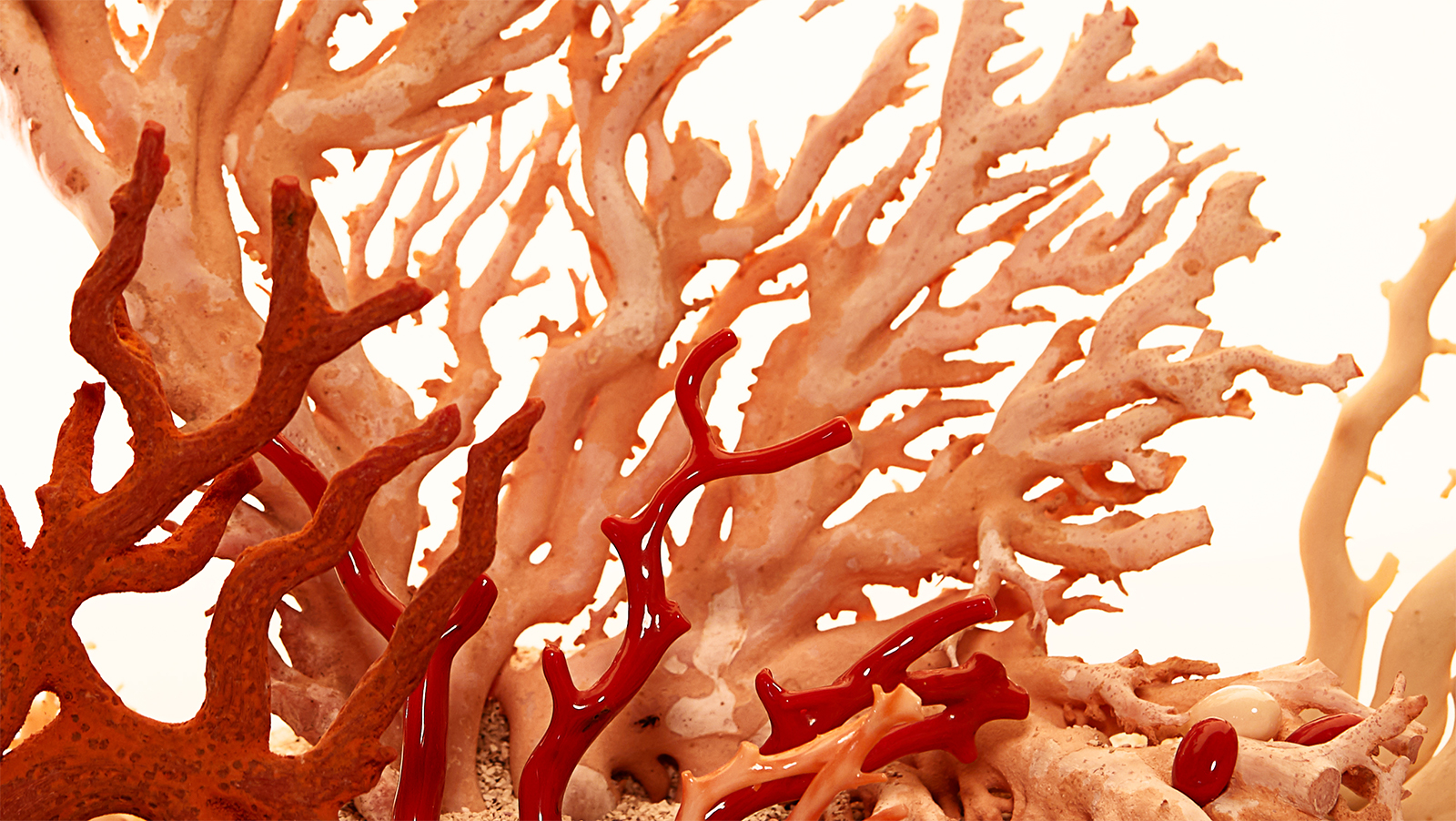
If not in fifty, coral comes in a wide variety of colour shades, from white to deep red. Its colour can, indeed, change depending on the sea and the depth at which it is fished.
Before going any further, let’s take a step back and ask ourselves a question, that may seem trivial but that maybe not everyone can answer: what is coral?
We at Moni Lisa have tried to give an answer, trying to keep a balance between science and mythology.
According to the legend, the coral was born from the blood of the beheaded Medusa, that coloured and petrified the seaweeds upon which Perseus had laid her head, turning them into coral.
However, the science has another explanation: the coral is the calcareous secretion produced by little octopus communities, with support and protection function. These secretions, blending together, result in colonies.
Both the interpretations, anyway, preserve and enhance the uniqueness of a such precious material.
Going back to jewellery, the most appreciated corals, both for their value and beauty, are those from the Mediterranean Sea and the Pacific Ocean.
Here’s our Mini-Guide to learning how to swim in this sea of colours.
And you? Are you ready to dive in? Let’s start from the Mediterranean Sea!
CORALLIUM RUBRUM

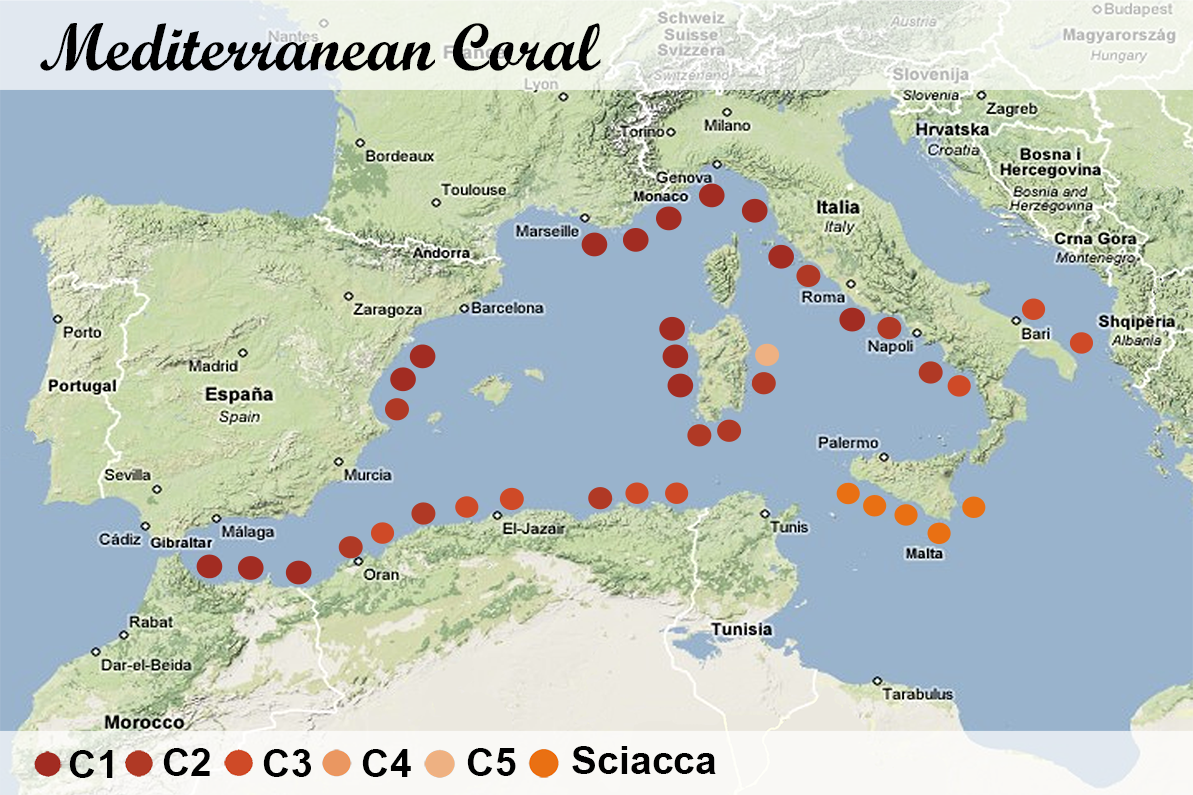
Let’s start from the most classic of corals, the red coral or Corallium Rubrum, fished in the Mediterranean Sea along the Italian, African, French, Spanish, Greek and Croatian coasts.
The Mediterranean coral occurs in a range of colours, that goes from deep red to dark orange.
SCIACCA CORAL

An exception is represented by the Sciacca coral, after the name of the Sicilian city along whose coast it is fished. Its colour, that varies from a deep orange to salmon colour, is due to its volcanic origin.
And now let’s move to the Pacific!
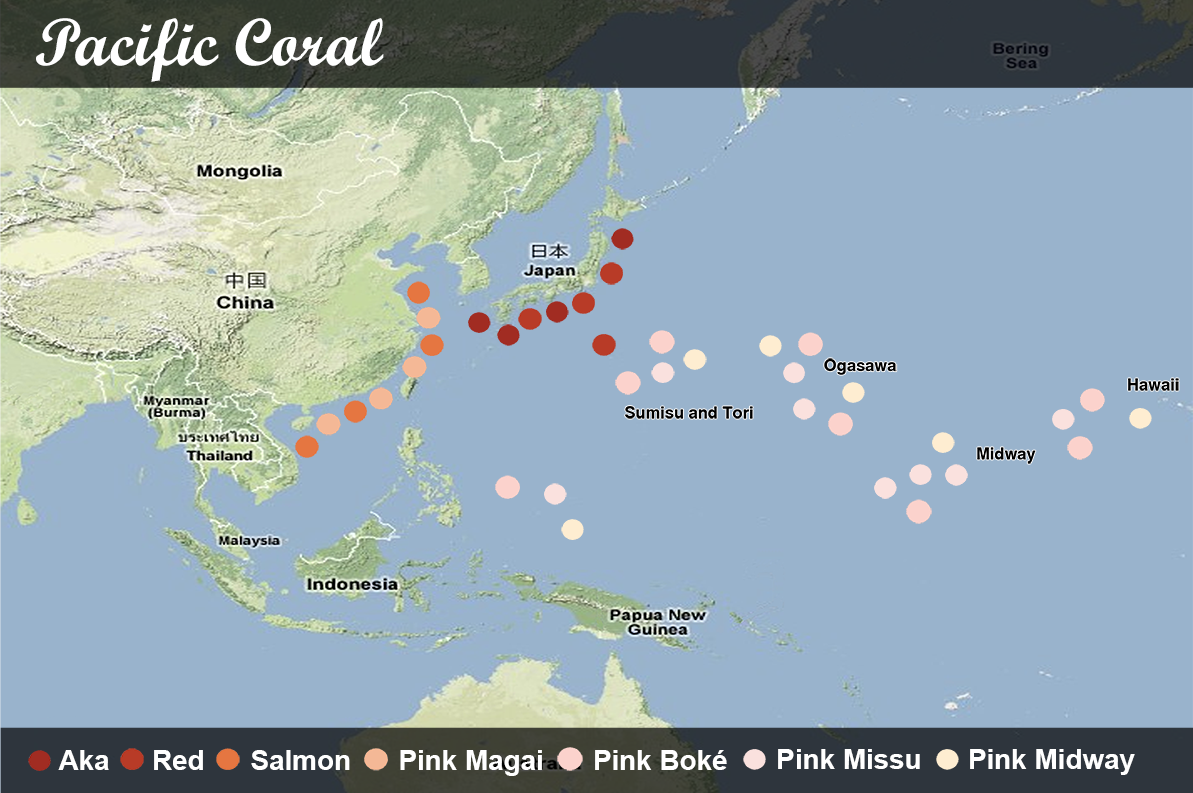
The corals coming from the Pacific Ocean are divided into three subcategories depending on colour and dimension: Corallium Elatius, Secundum e Japonicum.
All the Pacific corals have a typical white veining on the back or in the middle, which distinguishes them from Mediterranean corals.
CORALLIUM ELATIUS
The Elatius coral stands out for the size of its branches. It occours in different shapes of coral.
The range of colours has several shades:
MOMO CORAL

From Japanese Momo “peach”, it is characterized by orange shades, from peach colour to light salmon.
SATSUMA CORAL

Fished between Japan and Philippines, Satsuma coral mainly acquires reddish shades.
MAGAI CORAL

Magai coral has the darkest shade among the pink scale of Pacific corals.
It recalls the Angel’s Skin colour so much that it gains the name magai, that in Japanese precisely means imitation.
ANGEL’S SKIN CORAL

Angel’s Skin coral, due to the rarity and uniformity of its colour, is the finest and most valued among the coral varieties.
It has a very light pink colour, to the point of being often called bokè, which in Japanese means “pale”.
CORALLIUM SECUNDUM
The Corallium Secundum, fished off in southern Japan and Hawaii, includes all the coral’s lighter shades, from pure white to the pink. According to its colour, it can be classified in:
MIDWAY CORAL

Also known with its Japanese name Shiro “white”, the Midway coral ranges from cream-colour to the rarer milky-white.
MISSU CORAL

The name, deriving from the Japanese pronunciation of Miss, recalls the pinkish complexion of a noblewoman.
The Missu coral is indeed characterized for a uniform colour, from light pink to powder pink.
DEEP SEA CORAL

From the depth of the sea, this coral is characterized by unique red spots sprinkling the pink coral.
CORALLIUM JAPONICUM
Japonicum coral is one of the rarest in the world. Fished along the Japanese coasts, it is characterized by an intense deep red. Therefore, this coral type is named Momo or Aka.
MORO CORAL

Last but not least, the Moro coral is also named Aka, which in Japanese means “red as blood” precisely because its colour includes the darker and deeper shades of red.
Our journey between the fifty -or almost! – shades of coral is over!
Now you will be able to recognize and appreciate all the wonderful colours of Moni Lisa’s jewellery.
For other advices, do not forget to check our blog!