
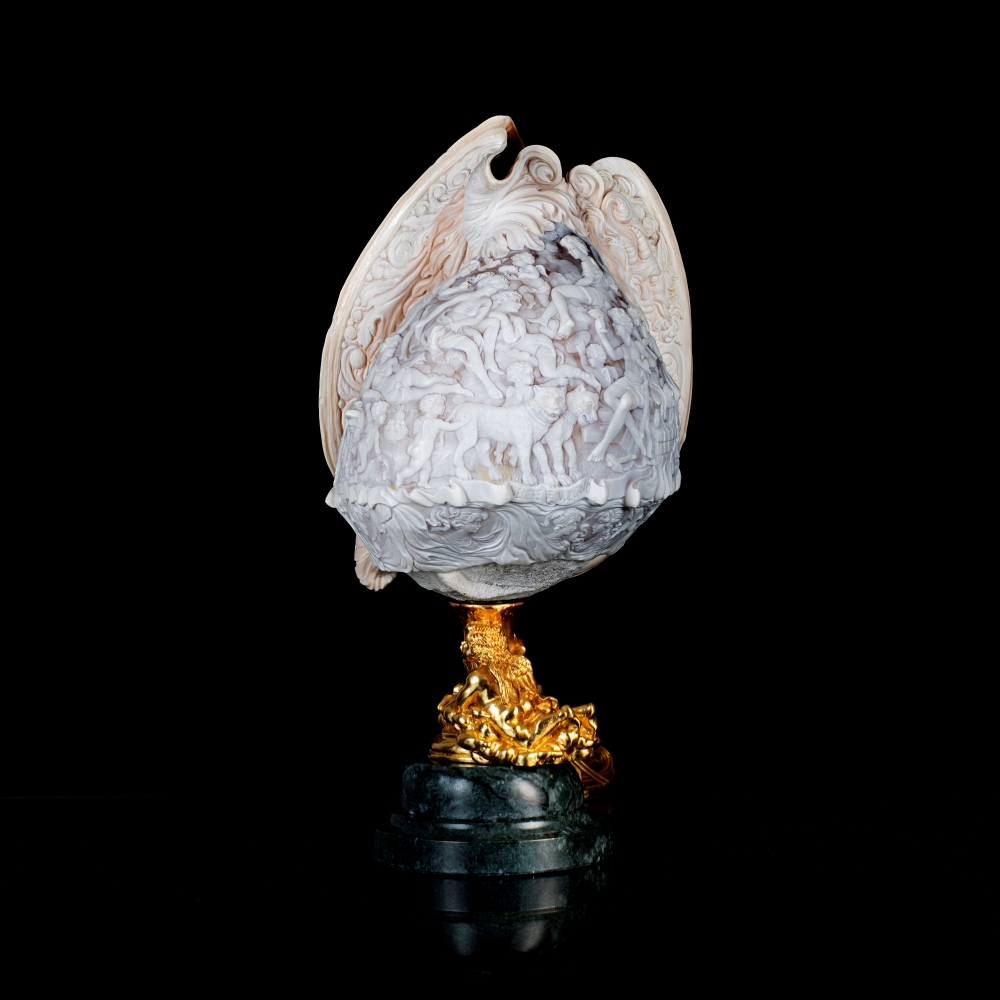
[vc_row full_width=”stretch_row_content_no_spaces” css=”.vc_custom_1628150628814{background-color: #f7f7f7 !important;}”][vc_column width=”1/2″][vc_gallery interval=”0″ images=”129658,129659,129660,129661,129662,129663″ img_size=”1000X1000″ onclick=””][/vc_column][vc_column width=”1/2″][vc_empty_space height=”200px” el_id=”nomobile”][vc_custom_heading text=”Venere and Vulcano” font_container=”tag:h2|font_size:40px|text_align:center|color:%230a0a0a” use_theme_fonts=”yes”][vc_empty_space height=”25px”][vc_column_text css=”.vc_custom_1688115812914{margin-right: 15px !important;margin-left: 15px !important;}”]This lamp, carved by Lucio Gaglione, is inspired by the myth of Venus and Vulcan. Since her born, the goddess of love was promised to Vulcan, god of the night and blacksmithing. But she fell in love with Mars and together they made love in Vulcan’s bed. When Vulcan knew about the love affair of his wife, he went to his forge and created a snare made of bronze chains so fine that not even the gods could see them, and he spread them across his marriage bed, draping them all over the bed-posts. Then he told Venus he was leaving for Lemnos. When Venus and Mars took advantage of Vulcan’s absence, they were caught in the net, unable to stir hand or foot.[/vc_column_text][vc_empty_space height=”25px”][sober_button align=”center” el_class=”informazioni” label=”Richiedi informazioni” link=”url:https%3A%2F%2Fmonilisa.blueboxcommunication.it%2Fcontattaci%2F|title:Contattaci”][/vc_column][/vc_row][vc_row full_width=”stretch_row_content” css=”.vc_custom_1628148678605{background-color: #f8f8f8 !important;}”][vc_column][vc_empty_space height=”25px”][vc_tta_tabs color=”white” active_section=”1″ css=”.vc_custom_1628148659838{background-color: #f8f8f8 !important;}”][vc_tta_section title=”Designer” tab_id=”1627375066984-9b1ba24d-38cd”][vc_column_text css=”.vc_custom_1688133891524{padding-right: 10% !important;padding-left: 10% !important;}”]
LUCIO GAGLIONE

Lucio Gaglione is the son of an old cameo carver of Torre del Greco. He attended the “Royal Academy of Princess Margherita di Savoia” where he specialized in the art of design, sculpture and carving. Then he graduated at the high school of art in Naples. He draws inspiration from the great artists of the Renaissance Age, from the “Jugendstil” and the Art Nouveau. He taught at the Royal academy in Torre del Greco. Many of his students are working as professional cameo carvers for the most famous Italian manufacturers and exporters.[/vc_column_text][/vc_tta_section][vc_tta_section title=”Materials” tab_id=”1627375066993-9e5ffd04-d782″][vc_column_text css=”.vc_custom_1689325839821{padding-right: 10% !important;padding-left: 10% !important;}”]
SARDONIX SHELL
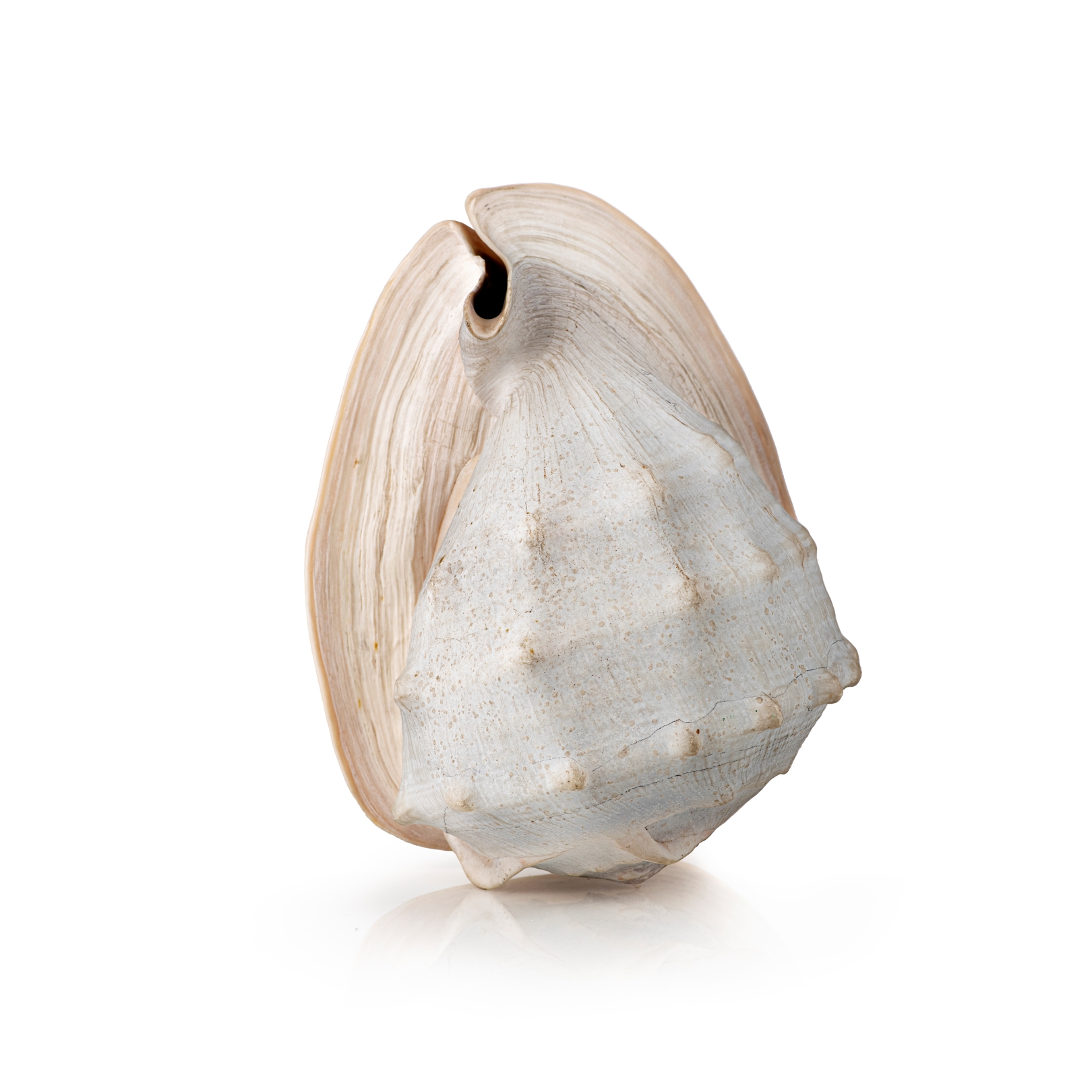
The Sardonix shell origins were mistakenly attributed to the coasts of Madagascar, but actually its natural habitat is the Gulf of Mexico and the Caribbean Sea. Its outer surface has white-to-cream shades, while its internal dark brown layer makes the shell very suitable for the realization of cameos. The strong chromatic contrast between the outer and the inner layers of the shell puts in evidence the representation carved, by arising the design from the bottom surface, as a bas-relief. This contrast creates a great light and shadow effect and emphasizes the depth and the forms of the whole representation. Each step of the shell processing, from the size selection to the shaping and engraving, is still carried out with the local traditional methods.[/vc_column_text][/vc_tta_section][/vc_tta_tabs][/vc_column][/vc_row][vc_row][vc_column][vc_column_text]
[/vc_column_text][/vc_column][/vc_row]