Reading time: 5′
That jewellery had the ability to communicate feelings or words that we are unable to convey verbally, is a well-known fact. But how many of you knew of the existence of acrostic jewellery?
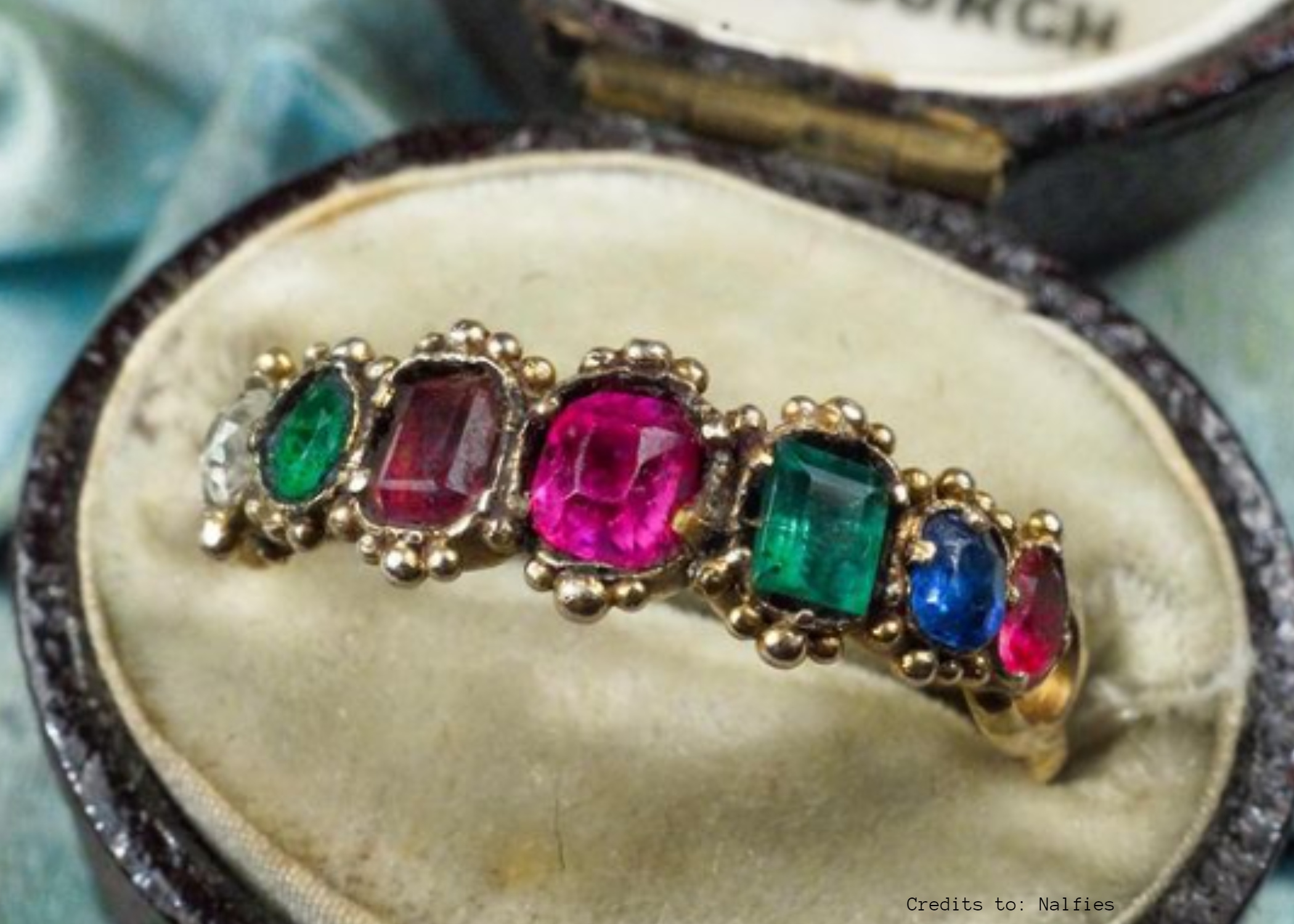
Born with the appearance of ordinary rings, brooches and necklaces, they are actually special accessories that use gems to form words, or even short coded messages for the recipient.
Want to know more? Then keep reading , we will introduce you to a world you will be fascinated by.
How acrostic jewellery has born and how it works
Inscribed in what is poetically called “the secret language of gems”, acrostic jewellery originated in France in the 18th century thanks to the jeweller Jean-Baptiste Mellerio. It seems that Mellerio had in fact started creating jewellery whose stones formed the French word j’adore, I adore.
The principle was this: once a piece of jewellery was chosen to be personalised, a series of precious stones were set inside it whose initials together would form the desired word.
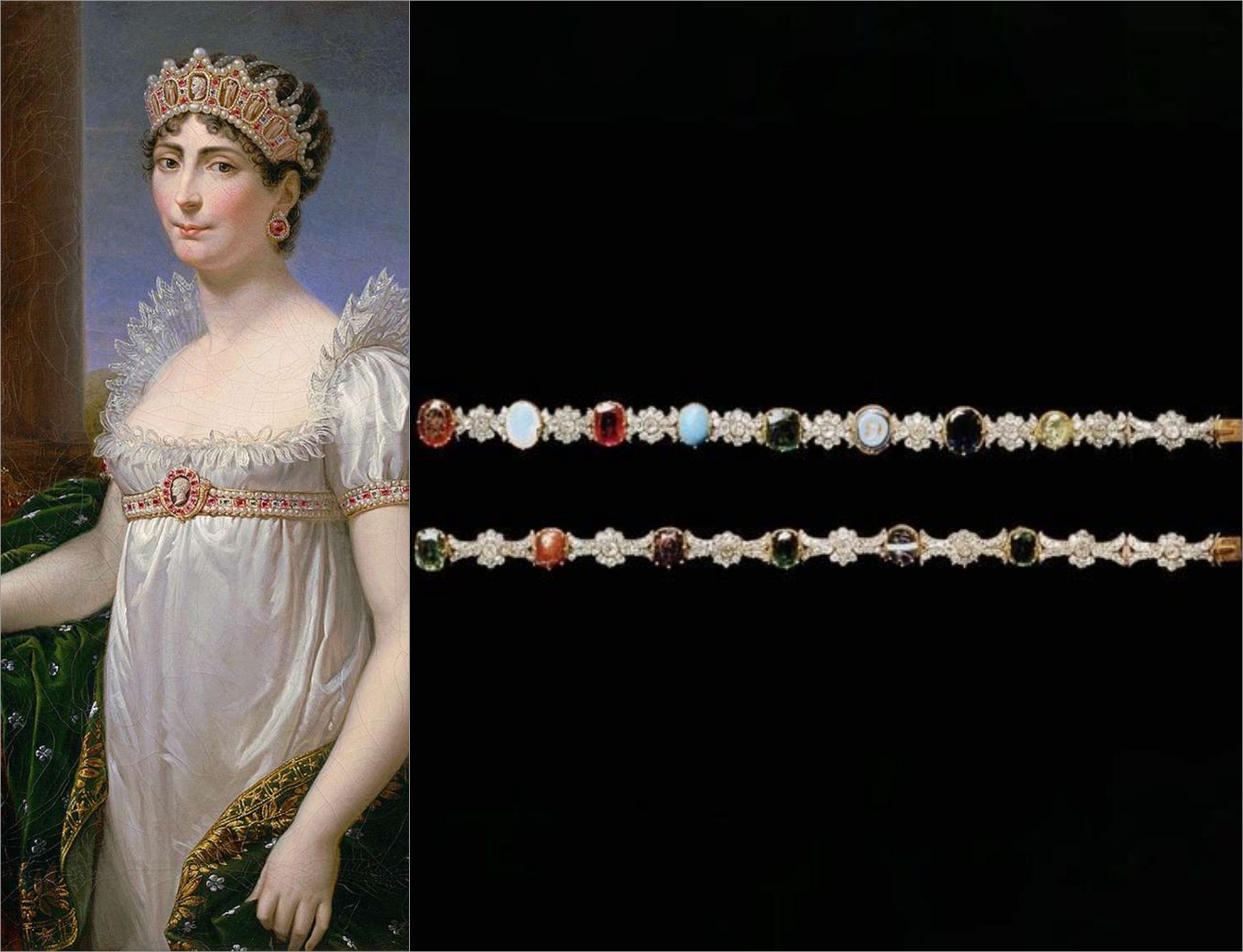
Admired by the creativity of such jewellery, Napoleon Bonaparte decided to commission acrostic jewellery for both Empress Josephine and his second wife, Marie Louise.
For the free-spirited Empress Josephine, who was known for defending her own style and getting rid of corsets and other similar conventions, Napoleon ordered the creation of two acrostic bracelets, whose secret message contained the names of his two beloved children: Eugène and Hortense.
However, the fascination of such jewellery affected not only France, but also England, where, throughout the Georgian and Victorian periods, they saw their popularity grow considerably. This is also evidenced by the fact that, in 1855, Charles Edward published a book entitled “The History and Poetry of Finger Rings”, in which this phenomenon was recounted, and in which we can also found an actual cipher alphabet:
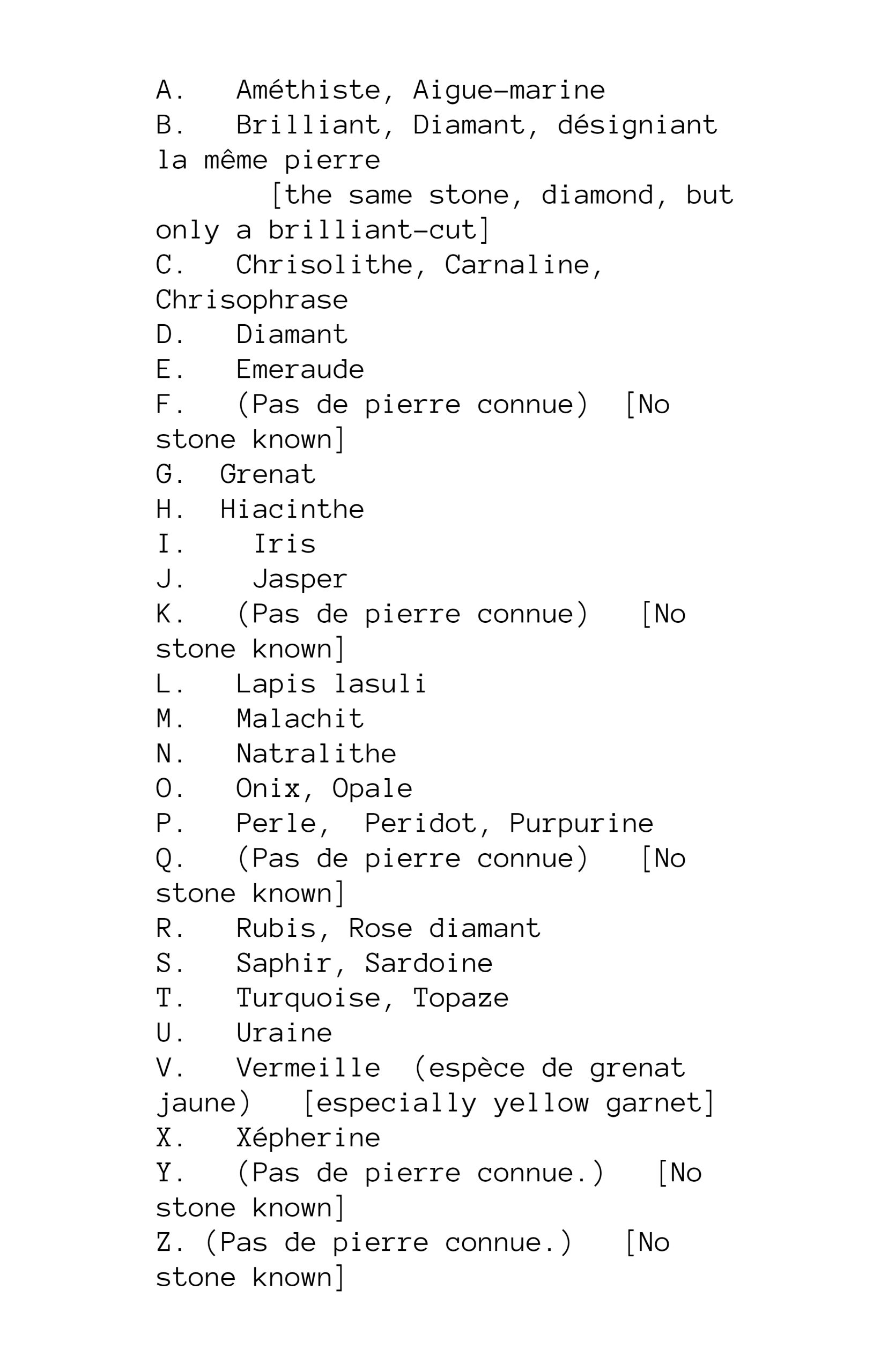
In case you were wondering, the reason why acrostic jewellery was so successful was related to the fact that, in those days, women and men could not really express freely what they thought or felt, due to the conventions of the time. This is why many lovers preferred to exchange such jewellery in order to communicate their most vivid affection.
This is also the purpose with which many women of the time used their fans, sending messages to the person concerned that only those who knew such secret language could understand. To give an example, if the woman opened the fan with her right hand this meant that she was in love with someone else.
If you think about it, it is probably the freedom that these means granted that fascinated the most indomitable, rebellious spirits, like that of Josephine and so many others, who felt locked into the rigid rules of the society of that time. But their charm also touched the more sensitive spirits, who perhaps only wished to honour their loved one with a gift that would remind them of their affection forever.
This is the case, for example, of these three locks from the Georgian era that, by joining the initials of their precious gems, form the word regard (gaze), as if to remind the recipient that the gaze of the beloved would rest on him wherever he was.

Nowadays, this kind of jewellery is increasingly rare, probably because we have now reclaimed our right to say the things we think, to loudly express the love we feel. Still, the magic of acrostic jewellery continues to enchant us today.
After all, what is more beautiful than being free to say what you want, but choose to whisper it?