
[vc_row full_width=”stretch_row_content_no_spaces” css=”.vc_custom_1628150628814{background-color: #f7f7f7 !important;}”][vc_column width=”1/2″][vc_gallery interval=”0″ images=”129588,129589,129590,129591,129592,129593″ img_size=”1000X1000″ onclick=””][/vc_column][vc_column width=”1/2″][vc_empty_space height=”200px” el_id=”nomobile”][vc_custom_heading text=”Depiction on the shell of
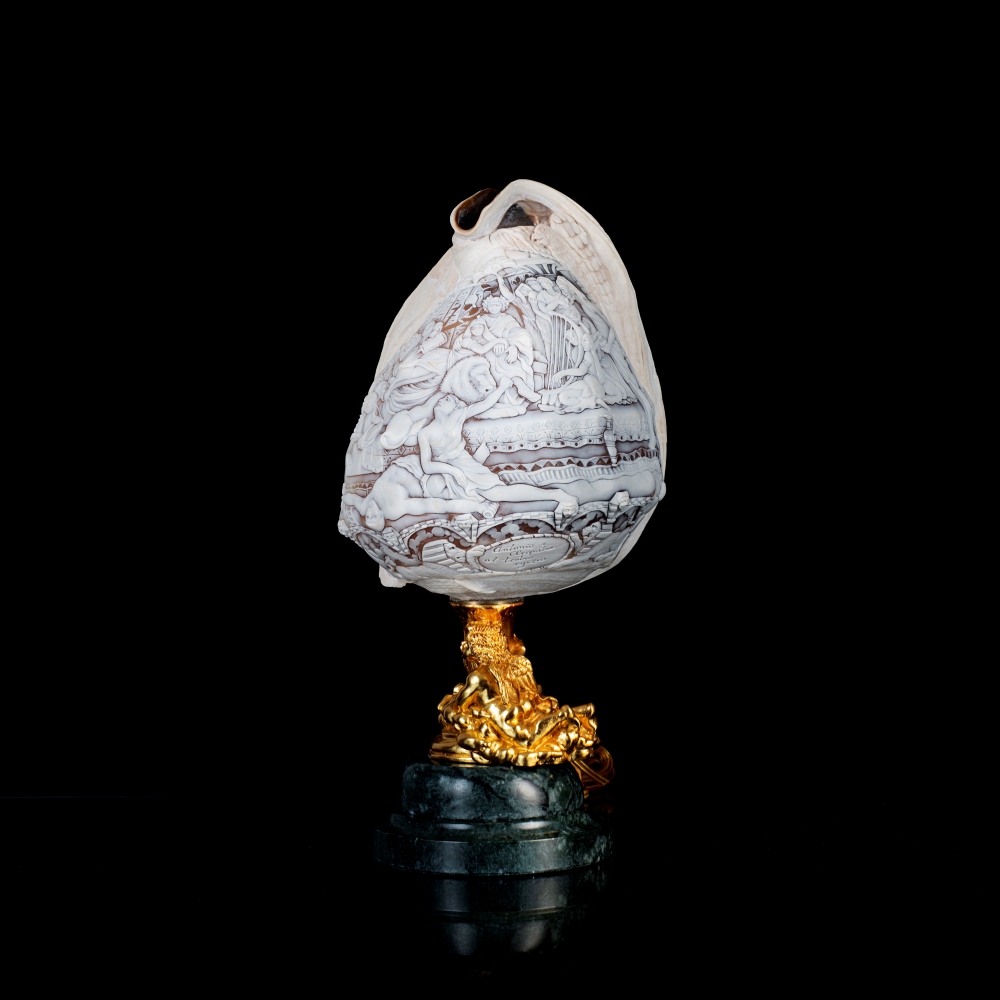
Antonio and Cleopatra at Egypt Theatre” font_container=”tag:h2|font_size:40px|text_align:center|color:%230a0a0a” use_theme_fonts=”yes”][vc_empty_space height=”25px”][vc_column_text css=”.vc_custom_1688033406943{margin-right: 15px !important;margin-left: 15px !important;}”]
This fine lamp is carved by Vincenzo Imposimato and it is inspired by Antony and Cleopatra, Egyptian Theater. The story of the two lovers became famous especially for the Shakspearian play.
Antony and Cleopatra is the story of a pair of lovers. Antony and Cleopatra is a container of extraordinary and fascinating images; it is the meeting of two cultures, two worlds. It is the meeting of power with beauty, the cult of the weapon with that of pleasure. Antony and Cleopatra is an opportunity to reflect on power, on the people who wield it, human beings just like us, driven by the same impulses, blighted by the same weaknesses.
[/vc_column_text][vc_empty_space height=”25px”][sober_button align=”center” el_class=”informazioni” label=”Richiedi informazioni” link=”url:https%3A%2F%2Fmonilisa.blueboxcommunication.it%2Fcontattaci%2F|title:Contattaci”][/vc_column][/vc_row][vc_row full_width=”stretch_row_content” css=”.vc_custom_1628148678605{background-color: #f8f8f8 !important;}”][vc_column][vc_empty_space height=”25px”][vc_tta_tabs color=”white” active_section=”1″ css=”.vc_custom_1628148659838{background-color: #f8f8f8 !important;}”][vc_tta_section title=”Designer” tab_id=”1627375066984-9b1ba24d-38cd”][vc_column_text css=”.vc_custom_1688033174644{padding-right: 10% !important;padding-left: 10% !important;}”]
VINCENZO IMPOSIMATO

lf you go back through the years, looking for lmposimato’s origins as a carneo carver, you will see a child moving a pencil on a paper to express himself, just like most children. That pencil he used to draw with has turned, by the passing of the years and through the chances of life, into a graver and that paper into a shell. His strong relations with the past come out from his grandfather’s teachings. The memory of his workroom is still alive in his mind: the smell of the pitch, the rhythmical noise of the graver on the shell cameos, sometimes of very small size, used for earrings and rings, his big and rough hands, his kindness and his humility.
That is the artist, this is the tradition.
He has in common with most of the carvers in Torre del Greco the inspiration source, that is made up mainly of images belonging to the Greek mythology, to the works of the great Renaissance artists, Botticelli, Michelangelo and Raffaello.
[/vc_column_text][/vc_tta_section][vc_tta_section title=”Materials” tab_id=”1627375066993-9e5ffd04-d782″][vc_column_text css=”.vc_custom_1689325499273{padding-right: 10% !important;padding-left: 10% !important;}”]
SARDONIX SHELL
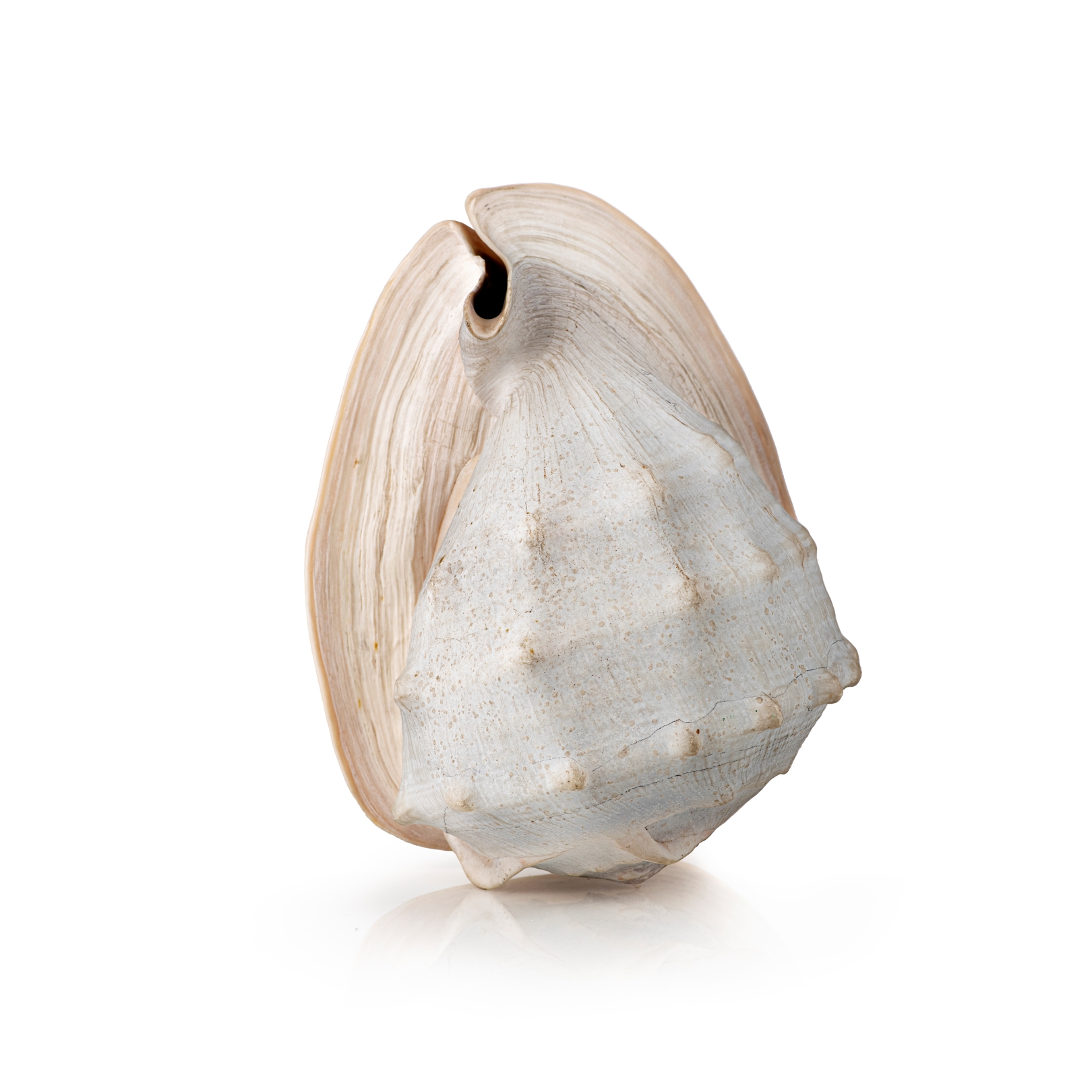
The Sardonix shell origins were mistakenly attributed to the coasts of Madagascar, but actually its natural habitat is the Gulf of Mexico and the Caribbean Sea. Its outer surface has white-to-cream shades, while its internal dark brown layer makes the shell very suitable for the realization of cameos. The strong chromatic contrast between the outer and the inner layers of the shell puts in evidence the representation carved, by arising the design from the bottom surface, as a bas-relief. This contrast creates a great light and shadow effect and emphasizes the depth and the forms of the whole representation. Each step of the shell processing, from the size selection to the shaping and engraving, is still carried out with the local traditional methods.[/vc_column_text][/vc_tta_section][/vc_tta_tabs][/vc_column][/vc_row][vc_row][vc_column][vc_column_text]
[/vc_column_text][/vc_column][/vc_row]