
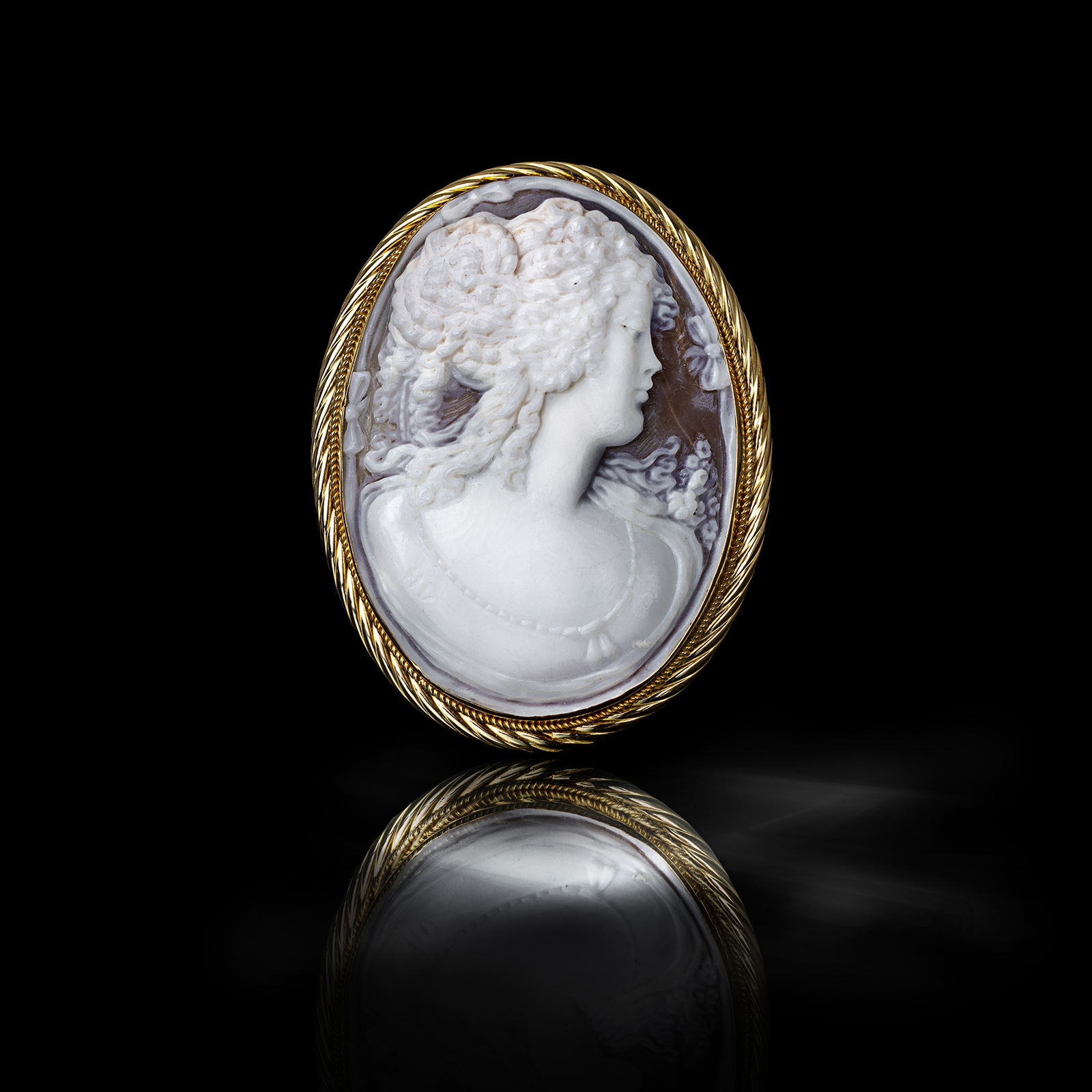
[vc_row full_width=”stretch_row_content_no_spaces” css=”.vc_custom_1628150628814{background-color: #f7f7f7 !important;}”][vc_column width=”1/2″][vc_gallery interval=”0″ images=”129707,129708″ img_size=”1600×1600″ onclick=”img_link_large”][/vc_column][vc_column width=”1/2″][vc_empty_space height=”200px” el_id=”nomobile”][vc_custom_heading text=”Lady Profile on shell Cameo
By Nocereto” font_container=”tag:h2|font_size:40px|text_align:center|color:%230a0a0a” use_theme_fonts=”yes”][vc_empty_space height=”25px”][vc_column_text css=”.vc_custom_1689608436703{margin-right: 15px !important;margin-left: 15px !important;}”]
Lady Profile carved on Sardonix Shell, with 18kt gold setting.
code: 4835
[/vc_column_text][vc_empty_space height=”25px”][sober_button align=”center” el_class=”informazioni” label=”Richiedi informazioni” link=”url:https%3A%2F%2Fmonilisa.blueboxcommunication.it%2Fcontattaci%2F|title:Contattaci”][/vc_column][/vc_row][vc_row full_width=”stretch_row_content” css=”.vc_custom_1628148678605{background-color: #f8f8f8 !important;}”][vc_column][vc_empty_space height=”25px”][vc_tta_tabs color=”white” active_section=”1″ css=”.vc_custom_1628148659838{background-color: #f8f8f8 !important;}”][vc_tta_section title=”Designer” tab_id=”1627375066984-9b1ba24d-38cd”][vc_column_text css=”.vc_custom_1689608656367{padding-right: 10% !important;padding-left: 10% !important;}”]
VINCENZO NOCERETO
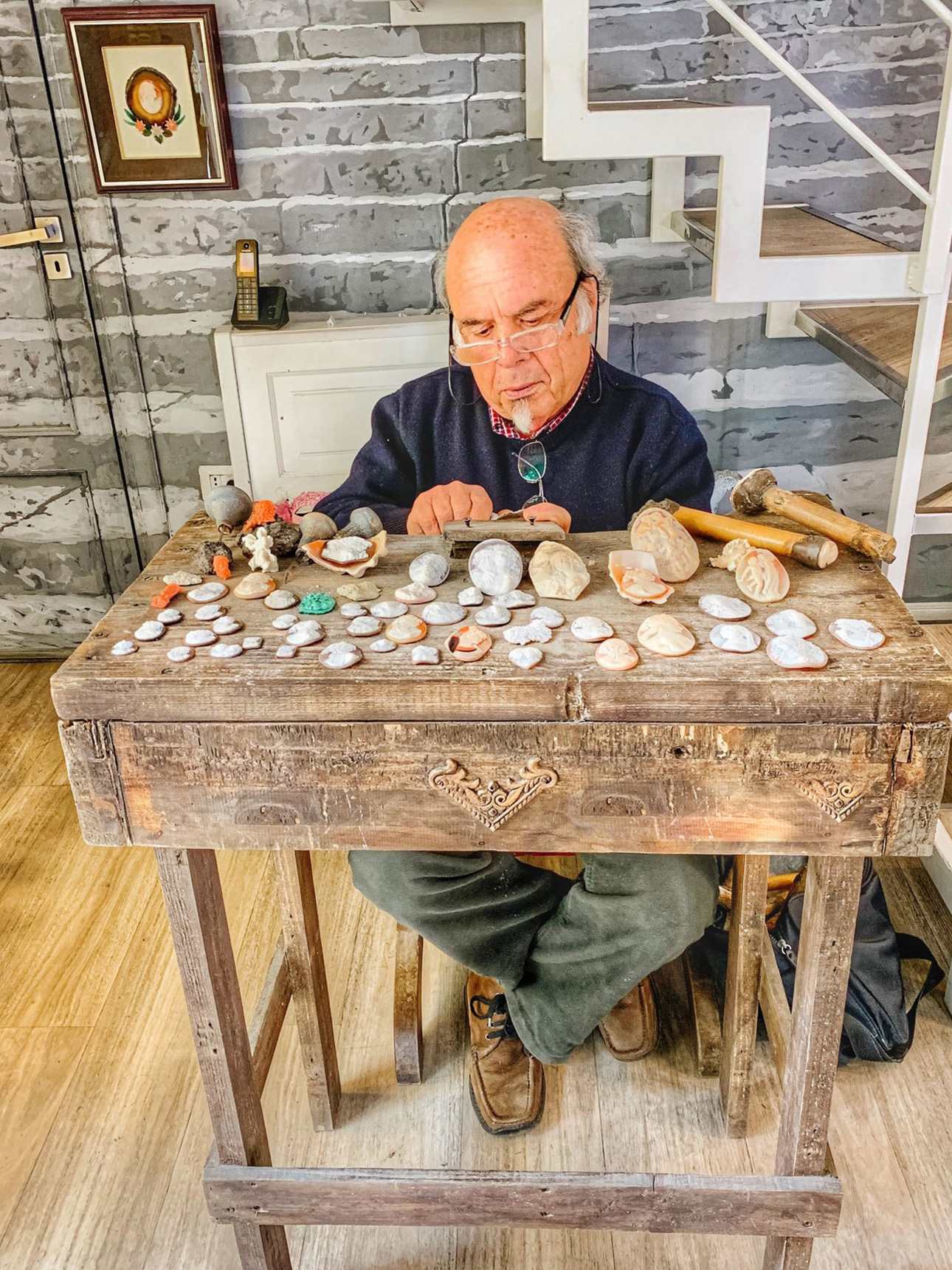
Vincenzo Nocereto was born in Torre del Greco on 14 June 1943. When he was young, he graduated from the Art Institute and subsequently he attended the Academy of Fine Arts in Naples. The premature death of his father, from whom he learned useful cameo engraving techniques, forced him to find a job quickly. As an art teacher, he worked in various schools until 2001, even outside the Campania region, in particular in San Donato di Ninea, a small town in Cosenza, Calabria, in the province of Potenza, in Salerno and finally in Torre del Greco.
Professor Vincenzo Nocereto, having worked with his father in a consistent and youthful manner in the art of cameo engraving, not only developed a deep passion for this art early on, but also assimilated working techniques that he meticulously developed and perfected over the years. His participations in educational and artistic activities during exhibitions in Milan, Campania and, of course, in his home town are innumerable.
He has conducted some seminars in various clubs for the historical development. During these meetings, after a detailed explanation of different species of shells and corals found in nature and in mother-of-pearl and lava stone, he has always encouraged participants to witness the different steps in the art of engraving with the use of a burin with individual ‘live’ demonstrations.[/vc_column_text][/vc_tta_section][vc_tta_section title=”Materials” tab_id=”1627375066993-9e5ffd04-d782″][vc_column_text css=”.vc_custom_1689252330901{padding-right: 10% !important;padding-left: 10% !important;}”]
CONCHIGLIA SARDONICA
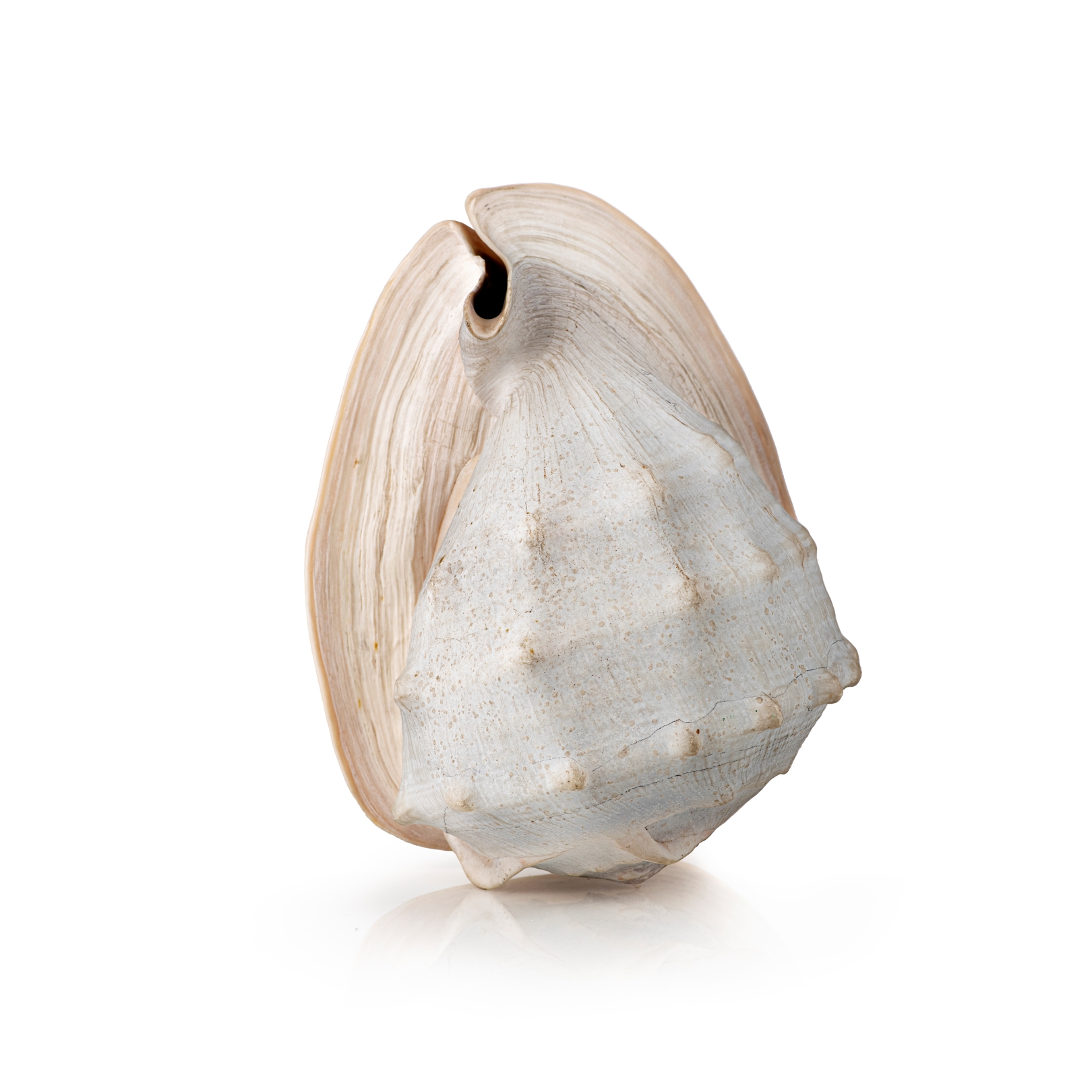
Le origini della conchiglia Sardonica erano erroneamente attribuite alle coste del Madagascar, ma attualmente il suo ambiente naturale è il golfo del Messico e il mar dei Caraibi.
La sua superficie esterna ha tonalità che vanno dal color bianco al color crema, mentre il suo strato interno di colore marrone scuro fa sì che la conchiglia sia idonea alla realizzazione dei cammei.
Il forte contrasto cromatico tra l’esterno e l’interno degli strati della conchiglia mette in evidenza la rappresentazione scolpita, creando il modello dalla superficie inferiore, come un bassorilievo. Questo contrasto crea una grande luce e un effetto ombra, enfatizzando la profondità e le forme dell’intera rappresentazione.
Ogni passo della lavorazione della conchiglia, a partire dalla selezione della dimensione, fino ad arrivare alla modellatura e all’incisione, è ancora realizzato con i metodi tradizionali locali.
ORO 18 Kt
L’oro puro, così come è offerto dalla natura, risulta essere un materiale malleabile. Per essere dunque utilizzato in gioielleria, necessita di essere integrato con altre leghe. È in base alla composizione di queste ultime che l’oro può assumere differenti colorazioni: nell’oro giallo vengono utilizzate leghe aggiuntive come il rame, lo zinco e l’argento; nell’oro bianco, invece, le leghe usate sono il rame (in quantità ridotta rispetto all’oro giallo) e il palladio.[/vc_column_text][/vc_tta_section][/vc_tta_tabs][/vc_column][/vc_row][vc_row][vc_column][vc_column_text]
[/vc_column_text][/vc_column][/vc_row]